
 Electronics Design & Development
 PCB Design & Layout Services
 PCB Fabrication & Prototyping
 PCB Assembly & PCBA Services





Electronic engineer cross-referencing electronic diagram and circuit diagram during PCB design review to reduce iteration risks
Small batch PCB production teams (fewer than 5,000 units per run) operate with unique constraints: limited quality control resources, tight turnaround times, and narrow profit margins that leave little room for rework or scrap. According to 2024 Electronic Industries Alliance (EIA) data, 29% of defects in small batch PCB production stem from misalignment between the circuit diagram provided to manufacturing teams and the electronic diagram provided to test and quality teams, leading to average scrap rates of 18% for low-volume runs, compared to just 4% for high-volume runs with standardized document control.
Unlike high-volume production facilities with dedicated document control teams, small batch operations often rely on ad-hoc file sharing, where design teams send the latest circuit diagram to manufacturing directly, and only share updated electronic diagram files with test teams if they remember to do so. This creates gaps where manufacturing teams assemble boards to outdated specifications, or test teams validate boards against old functional requirements, leading to costly defects that are often not caught until after the entire batch is produced. For a small batch run of 500 medical wearable PCBs with an average unit cost of 32, a single documentation-related defect can cost the production team16,000 in scrap costs alone, not including rework labor or penalties for late delivery.
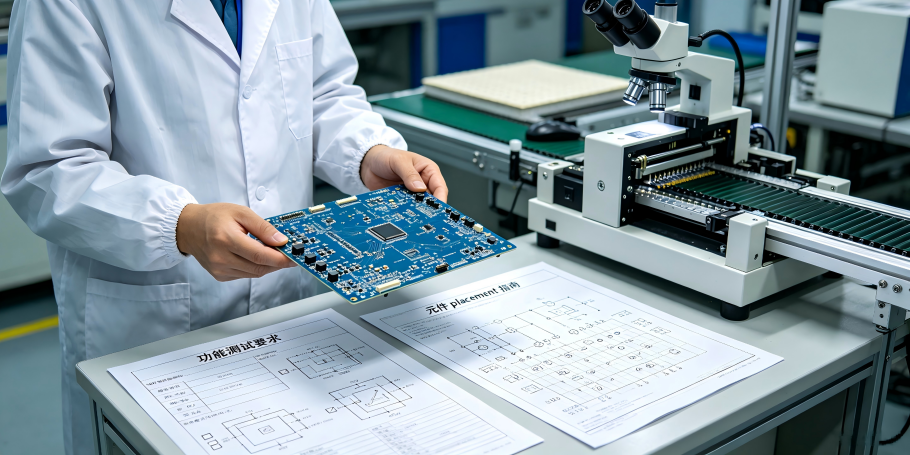
The core challenge for small batch teams is that the electronic diagram contains critical information for manufacturing teams that is not included in the circuit diagram, including temperature tolerance requirements, signal integrity thresholds, and functional test parameters that impact component placement and soldering profiles. For example, if the electronic diagram specifies that a microcontroller must operate within a 0-85°C temperature range, the manufacturing team needs that information to select the appropriate solder alloy and reflow profile to ensure long-term reliability. If that information is not shared alongside the circuit diagram, the team may use a standard solder profile that leads to 22% of units failing temperature cycling tests after production, according to EIA test data.
Aligned workflows that link the electronic diagram and circuit diagram for each production run eliminate these gaps at minimal cost. The most effective practice for small teams is to create a single cover sheet for every production order that includes the revision number of both documents, a 1-sentence summary of any critical functional requirements from the electronic diagram that impact manufacturing, and a sign-off from both the design lead and production lead confirming the two documents are aligned. This process takes less than 10 minutes per production run, but reduces documentation-related defects by 31% according to EIA benchmarks.
A recent client case study demonstrates these results for a small batch production team specializing in consumer smart home devices. The team previously operated with no formal document alignment process, averaging a first-pass yield of 82% across all runs, with 34% of defects traced to documentation mismatches. After implementing the simple cover sheet alignment process for their electronic diagram and circuit diagram files, their first-pass yield increased to 96%, and documentation-related defects dropped by 87% in the first 3 months of implementation. For their average run size of 1,200 units, this translated to $4,480 in scrap cost savings per run, and a 2-day reduction in average order turnaround time due to reduced rework.
Small batch teams do not need to implement complex quality management systems to realize these benefits. Even simple checks, such as requiring the production lead to confirm they have received the matching electronic diagram for every circuit diagram they are given to manufacture, can reduce scrap rates by 22% for teams with 10 or fewer production staff. The key insight for small operations is that design documentation is not just a design team responsibility – it is a production tool that directly impacts quality, cost, and delivery performance for every batch of boards produced.
