
 Electronics Design & Development
 PCB Design & Layout Services
 PCB Fabrication & Prototyping
 PCB Assembly & PCBA Services





Rigid-Flex PCBs in Aerospace: Enabling Lightweight, Reliable Avionics Systems
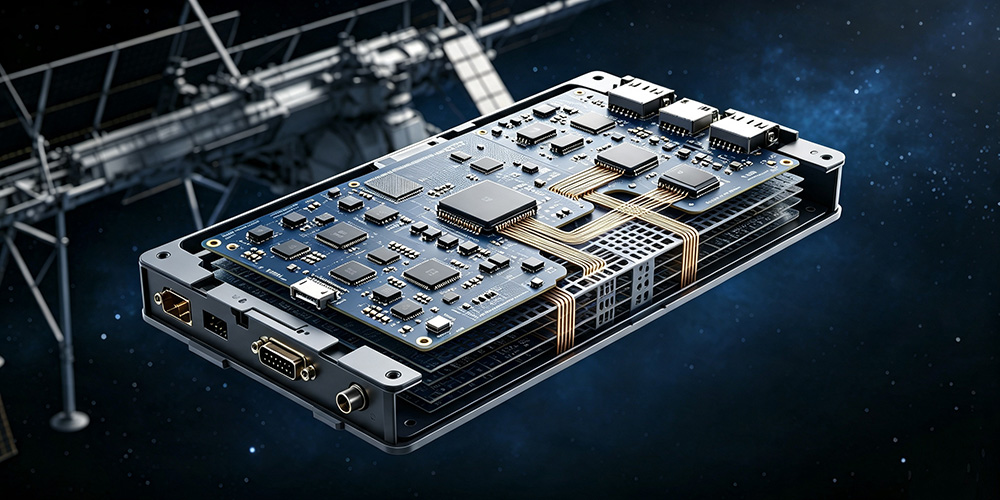
Aerospace avionics systems require the highest levels of reliability, lightweight design, and space efficiency to meet strict performance and fuel efficiency requirements. Traditional rigid PCB assemblies are heavy and bulky, while flexible PCBs lack structural stability for critical avionics components. Rigid-flex PCBs offer the perfect solution by combining the best of both technologies, enabling next-generation aerospace systems. Below are 5 key benefits of rigid-flex PCBs in aerospace applications.
1. Weight Reduction for Fuel Efficiency
Every pound saved in aircraft avionics translates to significant fuel savings over the lifespan of the aircraft. Rigid-flex PCBs reduce weight by up to 40% compared to traditional rigid PCB assemblies by eliminating bulky connectors and wiring harnesses. A leading aircraft manufacturer reduced avionics weight by 120 lbs by switching to rigid-flex PCBs in their commercial jetliners, resulting in $2.4 million in fuel savings per aircraft over 20 years.
2. Radiation Resistance for Satellite Applications
Satellites operate in the harsh radiation environment of space, which can damage electronic components and PCBs. Rigid-flex PCBs can be designed with radiation-resistant materials to withstand space radiation:
Radiation-Hardened Substrates: Use polyimide substrates with radiation resistance up to 100 krad
Tin-Lead Solder: Avoid lead-free solder, which is more susceptible to radiation damage
Shielding: Add copper shielding layers to protect against cosmic rays A US-based satellite manufacturer reduced PCB radiation failures by 80% by using radiation-hardened rigid-flex PCBs in their communication satellites.
3. Vibration & Shock Resistance for Aircraft
Aircraft are subjected to extreme vibration and shock during takeoff, landing, and turbulence. Rigid-flex PCBs offer superior vibration resistance compared to traditional rigid boards, reducing component failure rates by 75% in aerospace applications. The Federal Aviation Administration (FAA) found that rigid-flex PCBs had 99.9% reliability in vibration testing for aircraft avionics.
4. Compact Design for Space-Constrained Avionics
Aerospace avionics systems are often limited by space, especially in small aircraft and satellites. Rigid-flex PCBs enable high-density component placement and complex routing in tight spaces. Design features include:
3D Routing: Route PCBs in three dimensions to maximize space utilization
Stacked Rigid Sections: Stack multiple rigid sections with flexible interconnects
Integrated Components: Incorporate connectors and sensors directly into the PCB A European aerospace company reduced satellite avionics volume by 35% by using 3D-routed rigid-flex PCBs in their small satellite platform.
5. High-Reliability for Long Missions
Aerospace systems require long lifespans, with satellites often operating for 10+ years without maintenance. Rigid-flex PCBs offer high reliability through:
Reduced Interconnections: Fewer connectors mean fewer points of failure
Hermetic Sealing: Can be hermetically sealed to protect against moisture and contaminants
High-Quality Materials: Use aerospace-grade materials with long-term stability A NASA study found that rigid-flex PCBs had a 99.99% reliability rate over 10 years in space applications, compared to 98.5% for traditional rigid PCB assemblies.
Case Study: Rigid-Flex PCB Powers Mars Rover Avionics
NASA's Mars 2020 Perseverance rover uses rigid-flex PCBs in its avionics system to withstand the harsh Martian environment. Key benefits include:
Weight Reduction: 30% lighter than traditional rigid PCB assemblies, enabling more scientific instruments to be carried
Radiation Resistance: Radiation-hardened materials protect against cosmic rays and solar flares
Vibration Resistance: Withstood the extreme vibration of launch and landing on Mars
Conclusion
Rigid-flex PCBs are transforming aerospace avionics by enabling lightweight, reliable, and compact designs for aircraft, satellites, and space probes. As aerospace technology continues to advance with more complex missions and stricter performance requirements, rigid-flex PCBs will play an increasingly critical role in ensuring mission success. When selecting a rigid-flex PCB manufacturer for aerospace applications, look for partners with AS9100 certification and experience in space-grade electronics design.
