
 Electronics Design & Development
 PCB Design & Layout Services
 PCB Fabrication & Prototyping
 PCB Assembly & PCBA Services





Custom Electronics Design Services in China: From Circuit Design to Prototype Development
Custom Electronics Design Services in China: From Circuit Design to Prototype Development
If you are searching for a company in China to develop the electronics for a new product, the first question is not simply whether it can draw a schematic. You need to know how far the engineering work can go: from understanding the product requirements and selecting the circuit architecture to building a prototype and finding out why the first board does not behave as expected.
That distinction matters. A schematic-only supplier, a PCB layout team and a hardware development partner do different jobs. Before requesting a proposal, make sure the company can take responsibility for the stage where your project actually needs help.
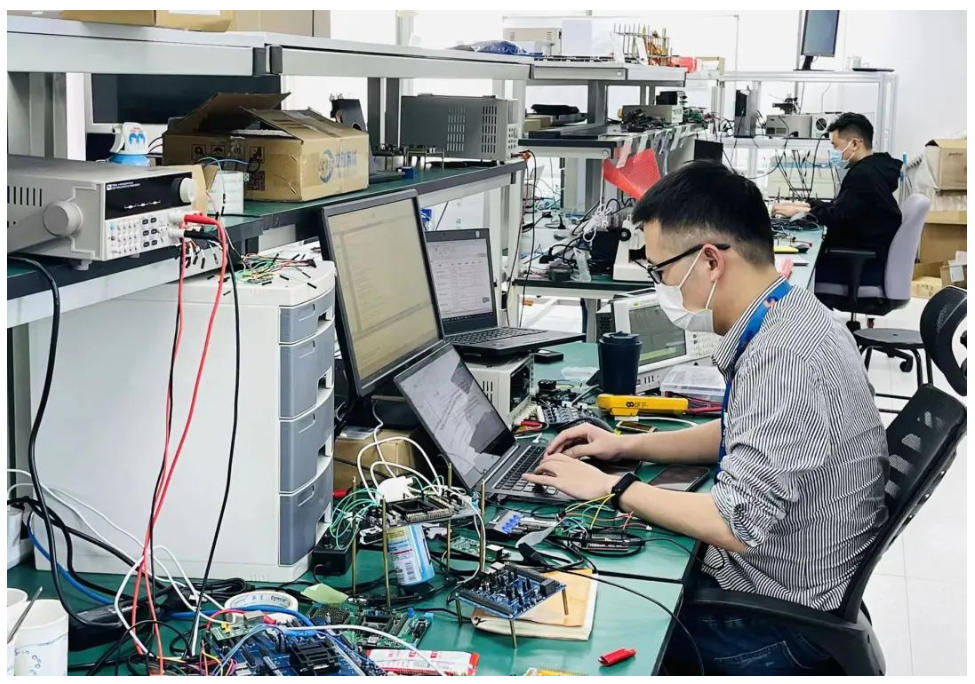
What do custom electronics design services usually include?
For an OEM or product company, custom electronics design can cover several connected engineering tasks. The exact scope depends on whether the project is a new product, an existing design that needs revision, or a specific circuit module that must be developed and tested.
Product requirements and architecture: translate the intended functions, interfaces, operating conditions and mechanical limits into a workable hardware plan.
Circuit and schematic design: select key components, define power rails, reset and clock circuits, protection, sensing and communication interfaces.
Processor and control hardware: integrate MCU, MPU or FPGA devices, memory, peripheral interfaces and the related power and timing requirements.
Power and motor-control circuits: develop power conversion, protection, current sensing, drive stages and thermal considerations around the actual load.
PCB coordination: coordinate the schematic with board layout, stack-up, impedance, component placement and manufacturing constraints.
Prototype bring-up: support first power-on, functional checks, issue tracking and engineering revisions under an agreed test plan.
Not every project needs all six stages. Some customers already have a schematic and need help with PCB implementation. Others have a product brief but no circuit design yet. A useful proposal separates the work that is included from optional activities such as firmware development, enclosure design, simulation, formal compliance testing or certification.
When does it make sense to work with an external hardware design company?
1. Your team has a product concept but no complete electronics team
This is common when a company has product management, mechanical engineering or software resources but does not have enough in-house circuit design capacity. An external team can help turn the functional requirements into a circuit architecture, select the main devices and develop the first hardware revision.
2. An existing product needs a redesign
A redesign may be needed because a component is obsolete, a supplier has changed, the product needs a new interface, or the original board has reliability or thermal issues. In this case, the engineering partner should first understand the existing design and the reason for the change. Replacing a part without checking its power, timing, firmware and layout dependencies can create another round of problems.
3. Your internal engineers need specialist or overflow support
A product team may have capable engineers but still need help with a processor board, power stage, high-speed interface or a project with a tight schedule. The external team should work to the customer's design rules and review process rather than forcing the project into its own template.
What should you look for in a hardware development partner?
A portfolio is useful, but it does not tell you everything. Ask how the supplier approaches the actual engineering work and what evidence will be available at each stage.
| What to evaluate | What a buyer should confirm |
|---|---|
| Relevant design experience | Has the team worked on comparable processor, power, control or communication hardware—not just boards with a similar appearance? |
| Engineering scope | Can it handle circuit architecture, schematic design, PCB coordination and prototype bring-up, or only one part of the work? |
| Design review | How are component selection, power sequencing, interface constraints, thermal issues and manufacturability reviewed? |
| Prototype support | Who handles first power-on, measurement, issue tracking and revisions when the first build reveals a problem? |
| Manufacturing coordination | Can the design be reviewed against the intended PCB fabrication and PCBA process before release? |
| Deliverables and ownership | Which editable design files, BOMs, reports and test records will be delivered, and what usage rights are agreed? |
What information helps a supplier assess your project?
You do not need a finished specification to start a conversation, but a short and honest project brief will make the first review much more useful. Include the product's main functions, block diagram if available, processor or key components already selected, power input and output requirements, communication interfaces, enclosure or board-size limits, operating environment, expected quantity and target schedule.
If you already have engineering files, say exactly what is available: schematic, BOM, PCB database, firmware, prototype photos or test records. It is also helpful to identify the parts of the project that are fixed and the parts where the supplier may recommend changes.
Electronics hardware development support from FYPCB
FYPCB's Electronics Design & Development service covers custom circuit and schematic design, MCU/MPU/FPGA hardware, power supply and motor-control circuits, high-speed digital interfaces, PCB layout coordination, hardware prototyping and bring-up. The actual scope is defined around the customer's product requirements and agreed deliverables.
For a project that needs both circuit development and board implementation, this coordination can reduce the gap between the schematic and the physical PCB. It also gives the engineering team a chance to consider fabrication and assembly constraints before the design is released.
If you are comparing electronics design companies in China, start with the work you need done and the evidence you expect to receive. FYPCB can review a new product brief, an existing schematic or a redesign request and discuss a suitable development scope.
Discuss Your Project with FYPCB
Tell us what the product needs to do, which interfaces and power conditions it must support, and whether you already have a schematic or PCB. FYPCB can review the hardware development scope and the next engineering steps.
WhatsApp / Tel: +86 157 7377 3732 | Email: [email protected]
