
 Electronics Design & Development
 PCB Design & Layout Services
 PCB Fabrication & Prototyping
 PCB Assembly & PCBA Services





Which industries does Fanyi Circuit's PCB design services cover? A comprehensive analysis of medical, automotive, industrial automation, and consumer electronics sectors.
Which industries does Fanyi Circuit's PCB design services cover? A comprehensive analysis of medical, automotive, industrial automation, and consumer electronics sectors.
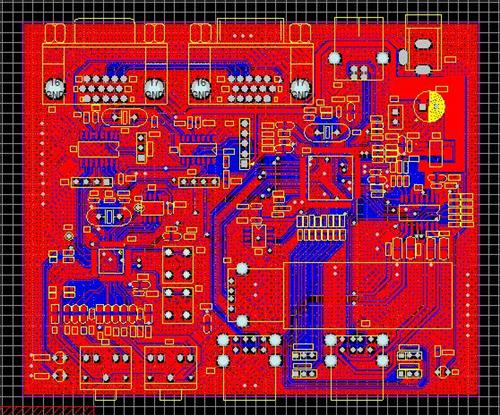
PCB design requirements vary significantly across different industries regarding reliability, manufacturing processes, and certification standards. Medical-grade PCBs must meet biocompatibility and safety regulations; automotive PCBs must pass automotive-grade certifications; industrial control PCBs must withstand extreme temperatures and vibration; while consumer electronics must balance cost-effectiveness with mass production capabilities. Fanyi Circuit has completed over 2,000 PCB design projects annually across a wide range of industries; we will now provide a comprehensive overview of these areas.
I. Overview of Key Covered Industries
Medical Electronics
PCB design for medical devices (mainboard), testing equipment, monitors, ultrasound systems, etc.
automotive electronics
Designs for vehicle control boards, BMS (Battery Management System), vehicle electronics, and in-vehicle communication systems.
industrial computer
Design of PLC control boards, servo drives, frequency converters, industrial sensors, etc.
CE
Design services for smart hardware, small household appliances, wearable devices, and smart home products.
communication apparatus
Design of communication base station boards, RF front-end modules, optical modules, high-speed backplanes, etc.
new energy
Design of energy storage management boards, charging pile control boards, photovoltaic inverter control boards, etc.
II. Design Characteristics and Requirements for Various Industries
2.1 Medical Electronics Industry
The PCB design requirements for medical electronics are among the highest across various industries, as they directly impact patient safety and equipment reliability:
· Safety regulations are stringent: compliance with safety standards such as creepage distance, electrical clearance, and insulation withstand voltage is required.
· High signal accuracy requirements: The analog front-end of detection equipment is highly sensitive to noise and interference.
· EMC performance requirements are stringent: medical devices must pass rigorous electromagnetic compatibility (EMC) tests.
· Reliability First: The equipment must operate stably for extended periods; therefore, sufficient margin should be incorporated into the design.
Fanyi Experience: We have completed PCB design for multiple medical testing devices and patient monitors; we are well-versed in medical safety standards and EMC design key points, and are capable of incorporating certification requirements from the Layout stage onward.
2.2 Automotive Electronics Industry
Automotive electronic PCB design must comply with automotive-grade requirements, as their operating environment is significantly more harsh than that of consumer electronics:
· Wide operating temperature range: Typically requires a working temperature range spanning from –40°C to +85°C, or even wider.
· Vibration and impact resistance: Vibrations and impacts encountered during vehicle operation impose specific requirements on component layout and pad design.
· Automotive-grade certification: The design must comply with the IATF 16949 system and meet the corresponding testing standards.
· Power supply stability: The in-vehicle power environment is complex, requiring consideration of scenarios such as load rejection, reverse polarity, and surge events.
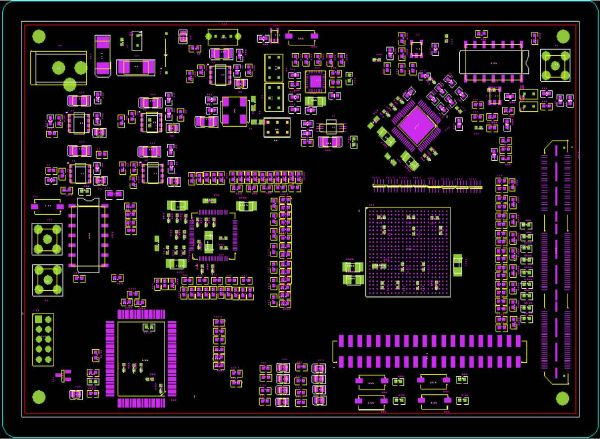
2.3 Industrial Control Sector
Industrial control products operate in factory environments and require high levels of stability and anti-interference capability:
· Strong electromagnetic environment: Factories often contain numerous motors and frequency converters; EMC design is therefore a critical priority.
· Long-term continuous operation: Industrial control equipment typically operates 24/7 without interruption, making heat dissipation and reliability design critical.
· Interface Protection: Digital I/O and communication interfaces require comprehensive protection circuits.
· Modular Design: Many industrial control products are serialized, requiring consideration of compatibility and scalability.
2.4 Consumer Electronics Industry
PCB design for consumer electronics places greater emphasis on cost control, mass production capabilities, and miniaturization:
· Cost-sensitive: requires optimizing the number of layers, materials, and manufacturing processes while ensuring performance requirements are met, thereby reducing BOM costs.
· Miniaturization and High Density: Wearable devices and smart home products have limited space, necessitating HDI or high-density layout solutions.
· Mass Production Consistency: Given the large volume of consumer electronics shipments, design must fully account for DFM to avoid batch-related issues.
· Fast iteration speed: consumer electronics have short life cycles, requiring design cycles that align with market trends.
III. Comparison of Typical Design Parameters across Various Industries
trade | Typical number of layers | Key Focus Areas | design cycle |
Medical Electronics | 4-12 layer | Safety standards, EMC, signal accuracy | 2–6 weeks |
automotive electronics | 2-10 layer | Automotive-grade reliability, wide operating temperature range, and vibration resistance | 2–5 weeks |
industrial computer | 2-16 layer | EMC, protection, stability | 2–4 weeks |
CE | 2-10 layer | Cost-effectiveness, miniaturization, and mass producibility | 1–3 weeks |
communication apparatus | 8-30 layer | High-speed signals, impedance, heat dissipation | 4–8 weeks |
new energy | 2-12 layer | High current, heat dissipation, and high-voltage isolation | 2–5 weeks |
IV. The Value of Cross-Industry Design Experience
Having worked in design across multiple industries offers the advantage of being able to draw upon experiences from different sectors. For example, one can apply experience in safety compliance design for medical boards to industrial control products; leverage expertise in high-speed signal processing for communication boards to automotive electronic domain controllers; or utilize cost optimization strategies from consumer electronics to cost-reduction initiatives for industrial products.
Fanyi Circuit's design team does not focus solely on a single type of board; instead, they undertake projects across multiple industries over the long term. This enables them to quickly identify the core requirements when encountering new demands and to provide more comprehensive design recommendations from various perspectives.
✓ Broad industry coverage: Mass production cases are available across six major sectors: healthcare, automotive, industrial automation, consumer electronics, telecommunications, and new energy.
✓ Transferable Experience: Cross-industry design experience allows for mutual learning and provides a more comprehensive approach to design.
✓ Familiarity with industry-specific standards: Understanding the certification requirements and testing standards for various industries to incorporate these considerations during the design phase.
✓ One-stop service capability: covering the entire process from design to PCB fabrication to SMT assembly, tailored to meet the diverse needs of customers across all industries.142188866 (S
