
 Electronics Design & Development
 PCB Design & Layout Services
 PCB Fabrication & Prototyping
 PCB Assembly & PCBA Services





Consigned vs Turnkey PCB Assembly
Consigned vs Turnkey PCB Assembly: Which Model is Right for Your Business?
When outsourcing PCB assembly, choosing between consigned vs turnkey pcb assembly is one of the most critical decisions you'll make. Each model offers distinct advantages and tradeoffs in terms of cost control, supply chain management, quality control, and resource requirements.
Understanding Consigned PCB Assembly
In a consigned PCB assembly model, the client provides all the components (PCB bare boards, electronic components, and any specialized parts), and the manufacturer handles only the assembly and testing processes. This model gives clients complete control over component sourcing, but also places the responsibility of inventory management, quality control of components, and supply chain risks on the client.
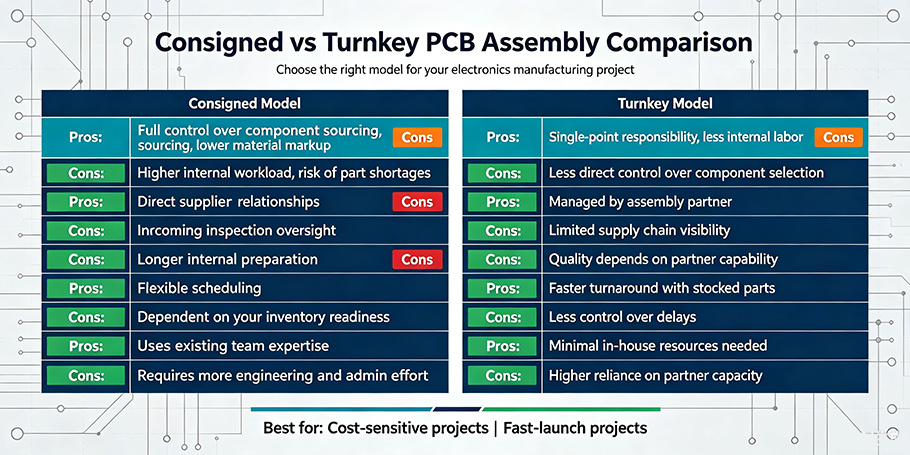
Pros of Consigned PCB Assembly
Complete Component Control: Clients can source components from preferred suppliers, ensuring access to specific brands, grades, or hard-to-find parts.
Cost Transparency: Clients pay only for assembly and testing services, with no markup on components, making cost forecasting more straightforward.
Existing Inventory Utilization: Clients can use existing component stock, reducing waste and saving money on excess inventory.
Intellectual Property Protection: For sensitive components or proprietary designs, consigned assembly reduces the risk of IP exposure to the manufacturer.
Cons of Consigned PCB Assembly
Supply Chain Responsibility: Clients must manage component sourcing, lead times, and supply chain risks, including component shortages and counterfeit parts.
Longer Lead Times: Coordinating component delivery to the manufacturer can delay assembly, especially if parts are backordered or require multiple shipments.
Quality Control Burden: Clients are responsible for verifying component quality, which requires additional resources for inspection and testing.
Administrative Overhead: Managing purchase orders, inventory, and logistics for components adds administrative complexity and costs.
Understanding Turnkey PCB Assembly
In a turnkey PCB assembly model, the manufacturer handles the entire process from component sourcing and procurement to assembly, testing, and shipping. Clients provide only the design files (Gerber files, BOM, assembly drawings), and the manufacturer takes care of everything else. This model offers convenience and reduces client workload, but gives manufacturers more control over component sourcing and pricing.
Pros of Turnkey PCB Assembly
End-to-End Convenience: Clients save time and resources by outsourcing all aspects of assembly, from component sourcing to shipping.
Supply Chain Expertise: Manufacturers have established relationships with component suppliers, access to bulk pricing, and expertise in managing supply chain risks.
Shorter Lead Times: Manufacturers can streamline component procurement and assembly processes, reducing overall project lead times.
Single Point of Contact: Clients work with a single team for all assembly needs, simplifying communication and issue resolution.
Cons of Turnkey PCB Assembly
Less Component Control: Clients may not be able to specify component brands or suppliers, which can be a concern for critical or specialized parts.
Component Markup: Manufacturers typically add a markup on components, which can increase overall assembly costs compared to consigned models.
Dependency on Manufacturer: Clients rely on the manufacturer's component sourcing and quality control processes, which may vary between providers.
Less Transparency: Clients may have limited visibility into component pricing and sourcing details, making cost forecasting more challenging.
How to Choose Between Consigned vs Turnkey PCB Assembly
1. Consider Your Resource Availability
If your team has the expertise and resources to manage component sourcing, inventory, and supply chain risks, consigned vs turnkey pcb assembly may favor consigned assembly. If you need to reduce administrative workload and focus on core business activities, turnkey assembly may be the better choice.
2. Evaluate Project Complexity and Volume
For high-volume projects with standard components, turnkey assembly can offer significant cost savings through bulk component pricing. For low-volume projects with specialized or hard-to-find components, consigned assembly may be more practical, as clients can source components independently.
3. Assess Quality and Compliance Requirements
For industries with strict quality and compliance requirements (like automotive or medical electronics), consigned assembly may offer more control over component quality and traceability. However, reputable turnkey manufacturers can provide detailed compliance documentation and meet industry standards like IATF 16949 or ISO 13485.
4. Analyze Cost and Lead Time Tradeoffs
While consigned assembly may have lower direct assembly costs, the indirect costs of component sourcing, inventory management, and supply chain risks can add up. Turnkey assembly may have higher upfront costs, but can save money through bulk pricing and reduced administrative overhead. Consider both direct and indirect costs when comparing consigned vs turnkey pcb assembly.
Consigned vs Turnkey PCB Assembly for a Startup
We recommended a hybrid model, where the client sourced the specialized sensors (consigned) and we handled the rest of the components and assembly (turnkey). This allowed the client to control critical component sourcing while leveraging our supply chain expertise for standard components.
Choosing between consigned vs turnkey pcb assembly depends on your business's resources, project requirements, and strategic goals. Consigned assembly offers control and transparency, while turnkey assembly offers convenience and supply chain expertise. By understanding the pros and cons of each model and evaluating your specific needs, you can make an informed decision that maximizes efficiency, quality, and cost savings.
If you have a BOM ready, send it over and we will quote both ways, consigned and turnkey, so the numbers do the arguing.
