
 Electronics Design & Development
 PCB Design & Layout Services
 PCB Fabrication & Prototyping
 PCB Assembly & PCBA Services





How Flexible PCBs Enable the Next Generation of Foldable Smartphones
Foldable smartphones are redefining mobile computing by offering large displays in compact form factors. The key technology enabling this revolution is flexible PCBs, which provide the connectivity needed between foldable displays, hinges, and internal components while withstanding millions of fold cycles. Below are 5 ways flexible PCBs are enabling the next generation of foldable smartphones.
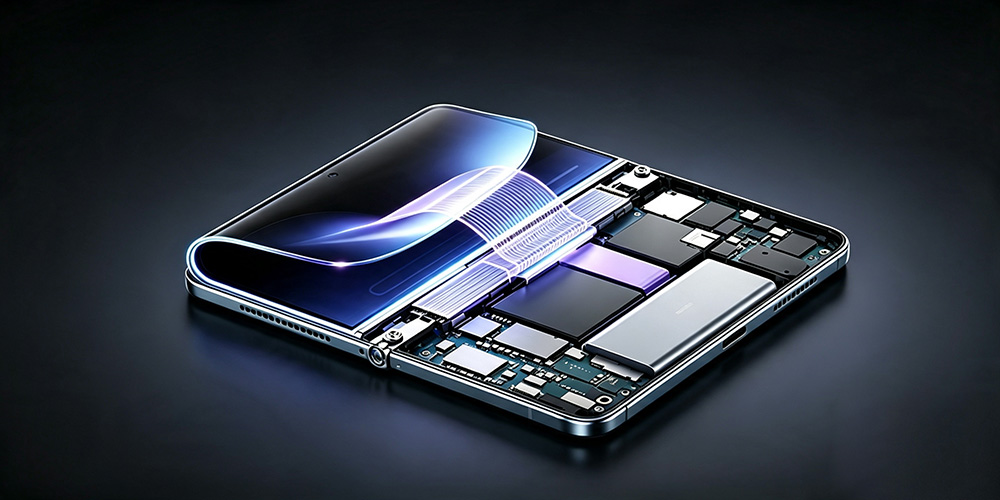
1. Foldable Display Connectivity
Foldable smartphones require reliable connectivity between the main display, secondary display, and motherboard. Flexible PCBs offer ultra-thin profiles that can be routed through the hinge without adding bulk. Key design features include:
Ultra-Thin Substrates: 25μm or thinner polyimide substrates for maximum flexibility
Fine-Pitch Traces: 50μm trace widths and spaces to fit more connections in limited space
Z-Axis Flex: Ability to fold in multiple directions for complex hinge designs A leading smartphone manufacturer achieved a 40% thinner hinge by using ultra-thin flexible PCBs in their foldable device.
2. Hinge Integration & Durability
The hinge is the most critical component of foldable smartphones, and flexible PCBs must withstand millions of fold cycles without failure. Design strategies for hinge integration include:
Dynamic Bend Testing: Test flexible PCBs for 200,000+ fold cycles at -20°C to 60°C
Trace Routing: Route traces in a serpentine pattern to absorb fold stress
Component-Free Zones: Keep components at least 5mm away from hinge bend lines Samsung's Galaxy Z Fold series uses flexible PCBs with serpentine routing that can withstand 200,000 fold cycles, equivalent to 5 years of daily use.
3. Slim Device Profiles
Foldable smartphones aim to maintain slim profiles even when closed. Flexible PCBs eliminate the need for bulky connectors and wiring harnesses, reducing device thickness by 15–20%. Design techniques include:
Double-Sided Component Placement: Place components on both sides of the flexible substrate
Integrated Passives: Incorporate resistors and capacitors into the substrate to save space
Stacked Flexible PCBs: Stack multiple flexible layers to increase connectivity without adding thickness A Chinese smartphone brand reduced their foldable device thickness by 18% by using stacked flexible PCBs in their internal connectivity.
4. 5G & High-Speed Data Transmission
Foldable smartphones require high-speed data transmission for 5G connectivity, 4K video streaming, and multitasking. Flexible PCBs must maintain signal integrity at frequencies up to 6GHz. Design features include:
Controlled Impedance Traces: 50Ω impedance for RF signals and 90Ω for USB 3.2
EMI Shielding: Add copper shielding layers to protect against signal interference
Low-Loss Materials: Use low-dielectric-constant (Dk) polyimide substrates to minimize signal loss A US-based smartphone startup improved 5G signal strength by 15% in their foldable device by using low-loss flexible PCB materials.
5. Water & Dust Resistance
Foldable smartphones must meet IP68 water and dust resistance standards, which requires flexible PCBs to be sealed against environmental elements. Design solutions include:
Hermetic Sealing: Use laser-welded connectors and waterproof adhesives
Conformal Coatings: Apply Parylene conformal coatings to protect against moisture
Gasket Integration: Integrate rubber gaskets around flexible PCB connectors A Japanese smartphone manufacturer achieved IP68 water resistance in their foldable device by using hermetically sealed flexible PCB connectors.
Case Study: Flexible PCB Design Enables Revolutionary Foldable Tablet
A Korean tech company developed a foldable tablet that transforms from a 7-inch phone to a 12-inch tablet. By using advanced flexible PCB design, they achieved:
200,000 Fold Cycles: Serpentine routing and dynamic testing ensured long-term durability
5G Connectivity: Low-loss flexible PCBs maintained high-speed data transmission in both form factors
IP68 Water Resistance: Hermetic sealing protected against water and dust
Conclusion
Flexible PCBs are the unsung heroes of foldable smartphones, enabling display connectivity, hinge durability, slim profiles, high-speed data transmission, and water resistance. As foldable devices continue to evolve with larger displays and more advanced features, flexible PCB technology will play an increasingly critical role in their design. When selecting a flexible PCB manufacturer for consumer electronics, look for partners with experience in foldable device design and strict quality control processes
