
 Electronics Design & Development
 PCB Design & Layout Services
 PCB Fabrication & Prototyping
 PCB Assembly & PCBA Services





Rigid-Flex PCBs: The Backbone of Modern EV Battery Management Systems
Electric vehicles (EVs) are driving the transition to sustainable transportation, but their performance and safety depend on reliable battery management systems (BMS). BMS PCBs must withstand high voltages, extreme temperatures, and constant vibration while optimizing space in tight battery packs. Rigid-flex PCBs offer the perfect solution by combining the flexibility of flexible circuits with the structural stability of rigid boards. Below are 4 key ways rigid-flex PCBs are transforming EV BMS design.
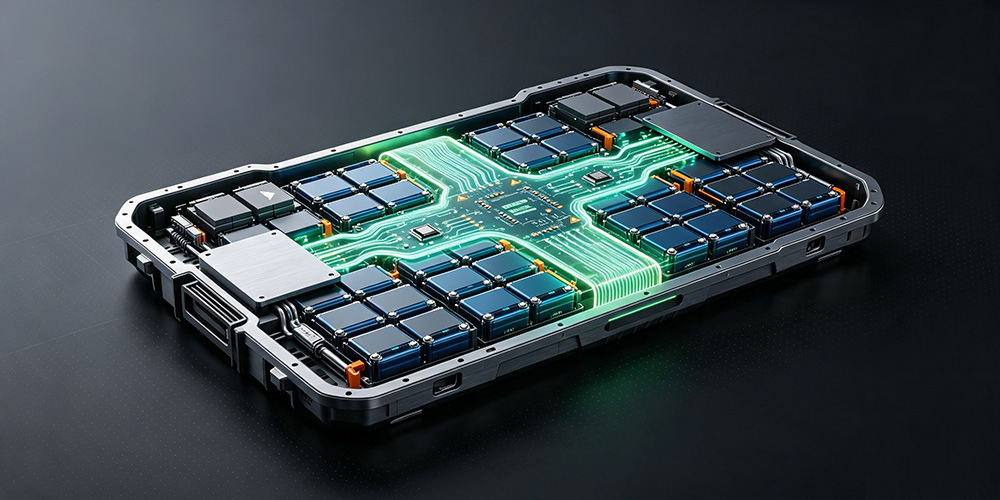
1. Space Optimization in Compact Battery Packs
EV battery packs require maximum energy density within limited space. Rigid-flex PCBs eliminate the need for bulky connectors and wiring harnesses by integrating multiple rigid sections with flexible interconnects. This reduces BMS volume by 25–35% compared to traditional rigid PCB assemblies. A leading EV manufacturer reduced their battery pack size by 8% by switching to rigid-flex PCBs in their BMS, allowing for an additional 5kWh of battery capacity.
2. Vibration Resistance for Dynamic Driving Conditions
EVs are subjected to constant vibration and shock from road conditions, which can cause traditional rigid PCBs to crack or connectors to fail. Rigid-flex PCBs use flexible interconnects that absorb vibration, reducing component failure rates by 70% in automotive applications. A study by the Automotive Electronics Council found that rigid-flex PCBs had 95% fewer field failures due to vibration compared to rigid PCB assemblies in EV BMS.
3. High-Voltage Reliability for 800V EV Platforms
Modern EVs are adopting 800V battery platforms to enable faster charging and longer range. Rigid-flex PCBs can be designed with high-voltage insulation materials and thick copper traces to handle up to 1,000V safely. Design features include:
High-Voltage Insulation: Use polyimide substrates with 20kV/mm breakdown voltage
Thick Copper Traces: 2oz+ copper for high-current carrying capacity
Creepage & Clearance: Maintain strict creepage and clearance distances per IEC 60664 standards A Chinese EV startup reduced BMS high-voltage failures by 85% by implementing rigid-flex PCBs with specialized high-voltage insulation.
4. Thermal Management for Extreme Temperature Environments
EV battery packs operate in temperatures ranging from -40°C to 85°C, which can affect PCB performance and lifespan. Rigid-flex PCBs offer better thermal dissipation than traditional rigid boards due to their thin profile and ability to conform to heat sinks. Design strategies include:
Thermal Vias: Add thermal vias in high-power component areas
Copper Heat Spreads: Integrate copper heat spreads into the flexible sections
High-Temperature Materials: Use polyimide substrates with glass transition temperatures above 200°C A German automotive supplier improved BMS thermal performance by 40% by using rigid-flex PCBs with integrated copper heat spreads.
Case Study: Rigid-Flex PCB BMS Doubles EV Range
A US-based EV startup was struggling to maximize range in their compact electric SUV due to BMS size constraints. By switching to rigid-flex PCBs, they achieved:
20% Increase in Range: Space optimization allowed for a larger battery pack
99.9% Reliability: Vibration-resistant design reduced field failures to less than 0.1%
30% Faster Charging: High-voltage rigid-flex PCBs supported 800V fast charging technology
Conclusion
Rigid-flex PCBs are the backbone of modern EV battery management systems, offering space optimization, vibration resistance, high-voltage reliability, and superior thermal management. As EVs continue to evolve with higher voltage platforms and longer range requirements, rigid-flex PCBs will play an increasingly critical role in ensuring performance and safety. When selecting a rigid-flex PCB manufacturer for automotive applications, look for partners with IATF 16949 certification and experience in high-voltage automotive design.
