
 Electronics Design & Development
 PCB Design & Layout Services
 PCB Fabrication & Prototyping
 PCB Assembly & PCBA Services





Common Issues & Fixes for Electronic PCB Circuit Failures
Electronic pcb circuit failures can cause costly downtime, product recalls, and customer dissatisfaction. For engineers and maintenance teams, quickly diagnosing and fixing these issues is critical. Below are the most common electronic PCB circuit failures and step-by-step fixes to resolve them.
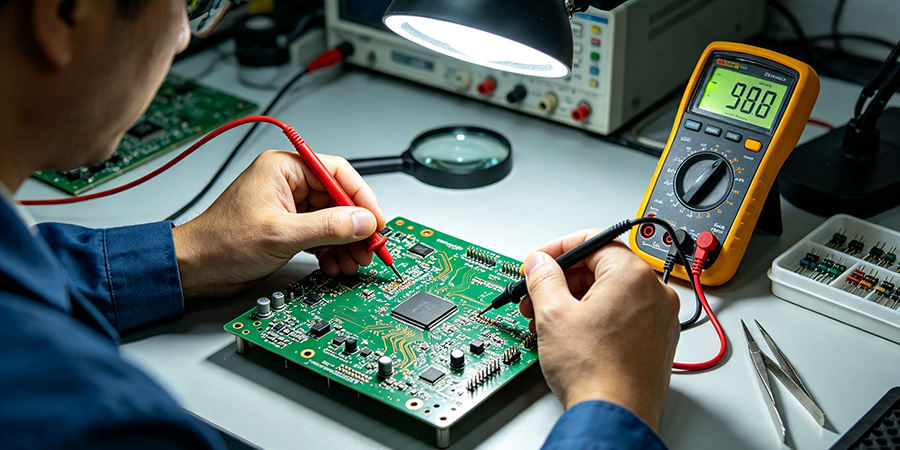
1. Open Circuits in Electronic PCB Circuit
An open circuit occurs when a trace on your electronic circuit board is broken, preventing current flow. Common causes include physical damage, poor soldering, or thermal stress.
Diagnosis: Use a multimeter to test continuity between the two ends of the trace.
Fix: For small breaks, repair the trace with a conductive epoxy or solder bridge. For larger breaks, replace the electronic circuit board or re-route the trace in a new design.
2. Short Circuits on Electronic Circuit Board
A short circuit happens when two conductive traces on your electronic pcb circuit come into contact, causing an unintended current flow. This can be caused by solder bridges, stray solder, or damaged insulation.
Diagnosis: Use an infrared thermal camera to detect hotspots on the electronic circuit board, which indicate short circuits.
Fix: Remove excess solder with a desoldering pump or solder wick. If the short is caused by damaged insulation, replace the affected electronic components PCB or cover the trace with insulating tape.
3. Electronic Components PCB Failure
Component failures are a common cause of electronic pcb circuit issues. Common failures include capacitor leakage, resistor burnout, and IC malfunction.
Diagnosis: Use a component tester to check the performance of electronic components PCB. For ICs, use an in-circuit tester to verify functionality.
Fix: Replace the faulty component with a new, authentic part. Ensure the replacement component matches the original specifications for voltage, current, and footprint.
4. Signal Integrity Issues in Electronic PCB Circuit
Signal integrity issues, such as signal distortion or delay, can cause your electronic circuit board to malfunction. These issues are often caused by improper trace routing, impedance mismatch, or crosstalk.
Diagnosis: Use an oscilloscope to analyze signal waveforms on your electronic pcb circuit.
Fix: Re-route high-speed signals to reduce crosstalk, add termination resistors to match impedance, or use shielded cables for sensitive signals.
5. Power Supply Failures
Power supply issues, such as voltage spikes or drops, can damage electronic components PCB and disrupt your electronic pcb circuit. Common causes include faulty power regulators, damaged capacitors, or overloaded circuits.
Diagnosis: Use a multimeter to measure voltage at the power input and output of your electronic circuit board.
Fix: Replace faulty power regulators or capacitors. Ensure your power supply can handle the current demands of your electronic pcb circuit by upgrading to a higher-rated supply if necessary.
Conclusion: By understanding common electronic pcb circuit failures and their fixes, you can minimize downtime and repair costs. Regular maintenance, proper design, and using high-quality electronic components PCB can help prevent many of these issues from occurring in the first place.
