
 Electronics Design & Development
 PCB Design & Layout Services
 PCB Fabrication & Prototyping
 PCB Assembly & PCBA Services





Lithium Battery Protection Solution: How PCB Design for Manufacture Reduces Costs and Improves Reliability
Lithium Battery Protection Solution: How PCB Design for Manufacture Reduces Costs and Improves Reliability
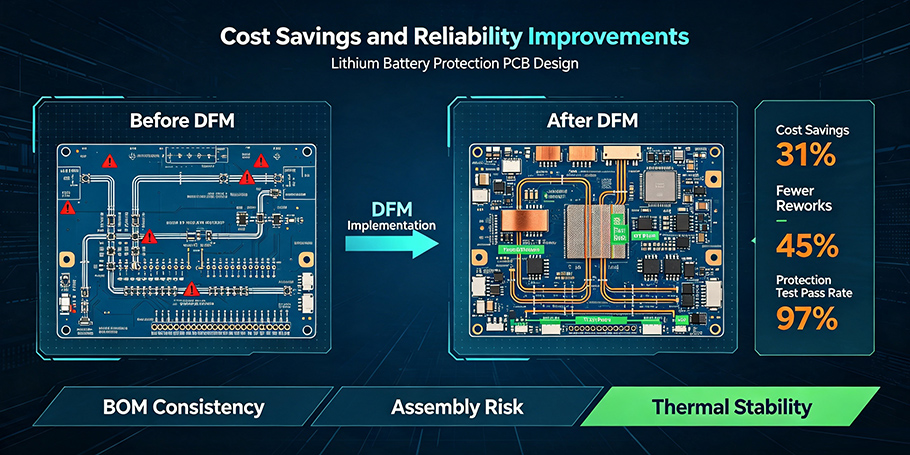
In the competitive energy storage market, reducing production costs while improving product reliability is critical for success. For Lithium Battery Protection Solutions, implementing PCB design for manufacture (DFM) principles is one of the most effective ways to achieve these goals. By optimizing your PCB design for the manufacturing process, you can reduce assembly time, minimize reworks, and improve the long-term reliability of your battery protection products.
The Cost of Poor PCB Design for Manufacture in Battery Protection Solutions
Poor PCB design can lead to significant costs during production and after-market. For example, a design that isn't optimized for assembly can increase assembly time by 25-30%, leading to higher labor costs. A design that doesn't consider thermal management can result in component failures, leading to costly reworks and warranty claims.
According to a study by the IPC Association Connecting Electronics Industries, up to 70% of production costs are determined during the design phase. This means that implementing PCB design for manufacture principles early in the design process can have a significant impact on your overall production costs.
How PCB Design for Manufacture Reduces Costs in Lithium Battery Protection Solutions
1. Reduces Assembly Time and Labor Costs
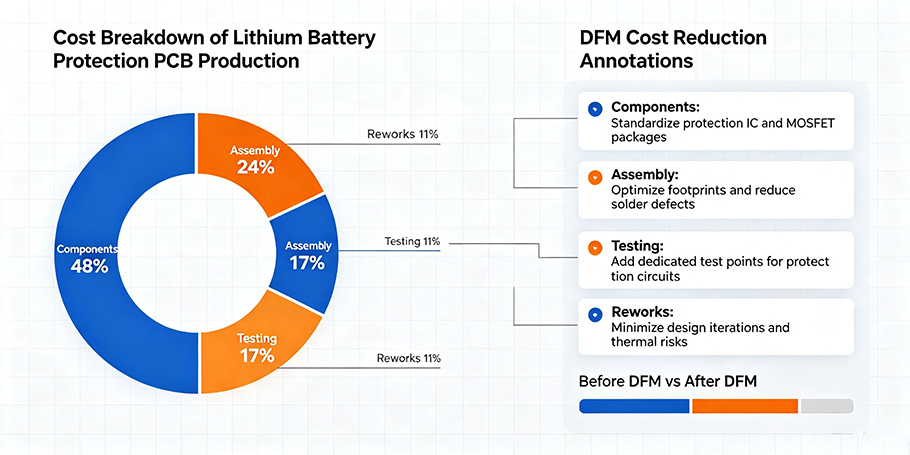
One of the primary benefits of PCB design for manufacture is reduced assembly time. By using SMD components, optimizing component placement, and designing for automated assembly, you can reduce the time it takes to assemble each PCB by 20-30%. This reduction in assembly time directly translates to lower labor costs, making your Lithium Battery Protection Solution more cost-effective.
Designing for automated assembly also improves assembly accuracy, reducing the risk of human error and the need for reworks. Automated pick-and-place machines can place components with 99.9% accuracy, compared to 95-98% accuracy for manual assembly. This higher accuracy reduces the number of defective PCBs, further reducing production costs.
2. Minimizes Reworks and Scrap
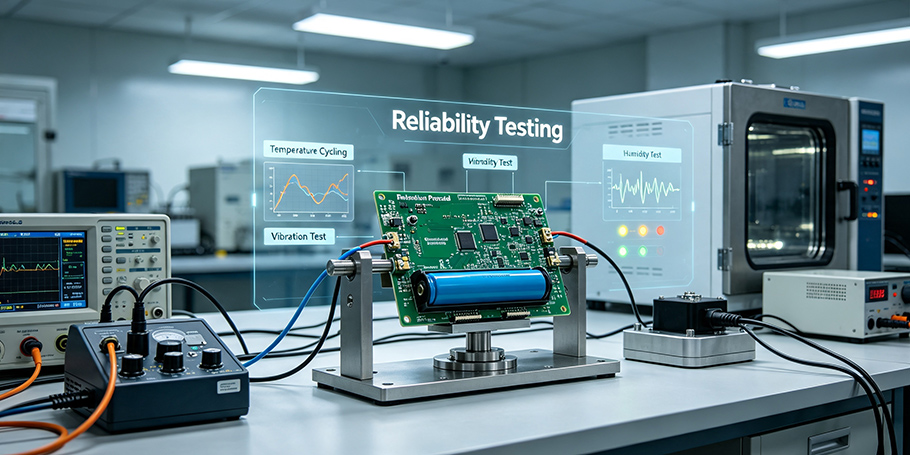
Poor PCB design can lead to a high rate of reworks and scrap, increasing production costs. For example, a design that doesn't consider component tolerances may result in components that don't fit properly, requiring rework or replacement. A design that doesn't consider thermal management may result in component failures during testing, leading to scrap.
Implementing PCB design for manufacture principles helps minimize reworks and scrap by identifying potential issues early in the design process. For example, DFM analysis can identify components that are difficult to assemble or components that may fail due to thermal stress. By addressing these issues before production begins, you can reduce the rate of reworks and scrap by up to 50%.
3. Improves Supply Chain Efficiency
PCB design for manufacture also helps improve supply chain efficiency by choosing components that are readily available and have stable supply chains. By avoiding components with long lead times or unstable supply chains, you can reduce the risk of production delays and ensure a steady supply of components for your Lithium Battery Protection Solution.
Working with your PCB manufacturer to optimize your BOM can also help reduce component costs. Your manufacturer can suggest alternative components that are cost-effective and readily available, helping you reduce your overall production costs.
How PCB Design for Manufacture Improves Reliability in Lithium Battery Protection Solutions
1. Enhances Thermal Management
Thermal management is critical for ensuring the long-term reliability of lithium battery protection PCBs. By incorporating thermal management features like copper pours, heat vias, and component placement optimization during PCB design for manufacture, you can reduce the risk of component failures due to overheating.
According to a study by the Electronic Industries Alliance, over 50% of electronic component failures are due to excessive heat. By improving thermal management through DFM, you can significantly improve the long-term reliability of your Lithium Battery Protection Solution.
2. Improves Mechanical Stability
PCB design for manufacture also helps improve the mechanical stability of your battery protection PCB. By choosing the right PCB material, thickness, and layout, you can reduce the risk of PCB damage due to vibration, shock, or temperature changes.
For example, using a rigid PCB material like FR-4 with a thickness of 1.6 mm can improve mechanical stability compared to a thinner PCB. Adding mounting holes and reinforcing edges can also help reduce PCB damage during assembly and use.
3. Ensures Consistent Performance
DFM principles help ensure consistent performance across all units of your Lithium Battery Protection Solution. By using components with tight tolerances and optimizing layout for signal integrity, you can reduce variation in voltage and current detection, ensuring that every unit performs as intended.
Consistent performance is critical for battery protection solutions, as even small variations in voltage detection can lead to overcharge or over-discharge risks. By implementing DFM principles, you can ensure that your product meets performance specifications consistently.
Partner with FYPCB for Lithium Battery Protection PCB Design
At FYPCB, we specialize in PCB design for manufacture for Lithium Battery Protection Solutions. Our team of experienced PCB designers has deep knowledge of the unique challenges of battery protection PCB design, including safety compliance, thermal management, and high-density layout. We work closely with you to understand your requirements and design a PCB that meets your performance, cost, and reliability goals.
We use industry-leading design tools and follow a structured design process that includes DFM analysis, thermal simulation, and compliance testing. Our manufacturing partners are certified to ISO 9001 and IPC-A-610 standards, ensuring your PCBs are produced to the highest quality standards.
Contact us today to schedule a free consultation and learn how we can help you design and manufacture a high-quality, cost-effective PCB for your lithium battery protection solution.
