
 Electronics Design & Development
 PCB Design & Layout Services
 PCB Fabrication & Prototyping
 PCB Assembly & PCBA Services





Evaluating Circuit Board Manufacturers for Mission-Critical Electronics
How to Evaluate Circuit Board Manufacturers for Mission-Critical Electronics: An Engineering Guide
Selecting the right manufacturing partner among thousands of global circuit board manufacturers is one of the most vital strategic decisions hardware engineering teams and procurement professionals make. A single unmapped trace defect, poor lamination cycle, or out-of-spec microvia plating can result in catastrophic field failures, expensive product recalls, and severe brand erosion. This risk is especially acute in high-stakes industries such as medical imaging control units, automotive electronics, and aerospace control systems.
This guide provides an actionable technical framework for auditing potential fabrication partners. Beyond basic price-per-board metrics, long-term performance relies on manufacturing discipline, material handling capabilities, and rigorous quality control protocols.
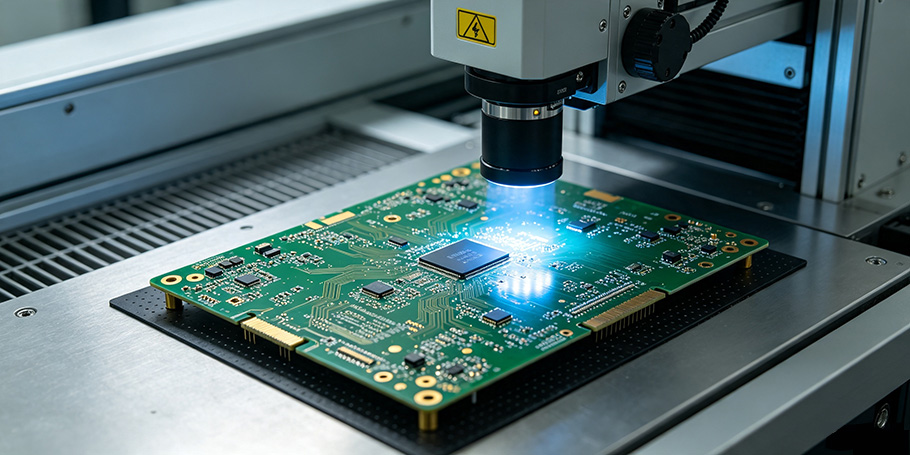
Key Technical Auditing Criteria for Circuit Board Manufacturers
1. IPC Class Compliance and Advanced Certifications
Standard commercial electronics often adhere to IPC-A-600 Class 2 standards, which allow minor cosmetic and internal structural variations. However, mission-critical applications require strict compliance with IPC-6012 Class 3 or Class 3/A.
When auditing candidate circuit board manufacturers, verify that their facilities hold current certifications, including ISO 9001:2015 for basic quality systems, ISO 13485 for medical device manufacturing, IATF 16949 for automotive quality management, and UL 94V-0 for substrate flammability. Class 3 compliance mandates zero plating breakouts, a minimum hole wall copper thickness of 25 microns, and enhanced thermal shock resistance.
2. Advanced Substrate Processing and Thermal Management
Modern electronic architectures demand advanced material handling beyond standard FR-4 materials with glass transition temperatures around 130 to 140 degrees Celsius. Top-tier fabricators maintain deep inventory and processing expertise in high-Tg FR-4, high-frequency Rogers and Taconic laminates, and metal core PCBs designed for high heat dissipation.
Furthermore, advanced applications utilize composite sandwich structures incorporating specialized materials like Polymethacrylimide structural foams. These PMI foams are engineered into antenna radar covers and structural enclosures to deliver extremely low dielectric constants and minimal dissipation factors, ensuring optimal electromagnetic performance.
Evaluating DFM Support and Signal Integrity Engineering
A competent manufacturer does not merely process production files blindly. They actively audit them through automated and manual Design for Manufacturability reviews to prevent costly production delays.
Controlled Impedance Fabrication
For high-speed digital designs operating with PCIe, Ethernet, or USB interfaces, maintaining precise trace geometry is mandatory. Qualified circuit board manufacturers must offer Polar Field Solvers for precise stackup modeling, Time Domain Reflectometry testing on dedicated coupons to verify impedance tolerances within 5 to 8 percent, and etch factor compensation to offset chemical etching losses.
Sequential Lamination Mastery
High-Density Interconnect designs require precise control over multi-press operations. Fabricators must demonstrate high registration accuracy during sequential lamination cycles to align microvias across stacked or staggered buried layers reliably.
Aligning Fabrication with Your PCB Assembly Supplier
A flawless bare board is only half of the equation. The transition from raw board fabrication to Surface Mount Technology placement requires close operational alignment between your fabricator and your chosen pcb assembly supplier.
When evaluating turnkey or consigned assembly operations, scrutinize several core operational capabilities. Automated 3D Solder Paste Inspection ensures precise solder volume deposition before component placement. Full barcode component traceability allows tracking down to specific reel numbers and lot codes. Additionally, the bare board surface finish, such as ENIG or Immersion Silver, must be fully compatible with solder chemistries and reflow profiles to prevent intermetallic micro-voiding.
Essential Audit Checklist for Sourcing Partners
To mitigate supply chain bottlenecks and guarantee long-term operational stability, demand complete operational transparency on four key performance metrics:
First-Pass Yield rates, where audited metrics should consistently exceed 98.5 percent.
In-house microsectioning capabilities, ensuring the vendor routinely inspects internal copper plating thickness and microvia target contacts.
Raw material provenance, verifying that copper-clad laminates are sourced directly from authorized tier-one material suppliers.
Engineering response speeds, requiring turnaround times under twelve hours for critical Engineering Queries.
Partnering with a fully certified, technologically advanced manufacturer transforms your electronic supply chain from a point of vulnerability into a sustainable competitive edge.
Need an Immediate DFM Review or High-Reliability Quote?
Contact our senior engineering team today to upload your Gerber files for a comprehensive technical analysis.
