
 Electronics Design & Development
 PCB Design & Layout Services
 PCB Fabrication & Prototyping
 PCB Assembly & PCBA Services





The Future of PCB Fabrication: Trends to Watch in 2026 and Beyond
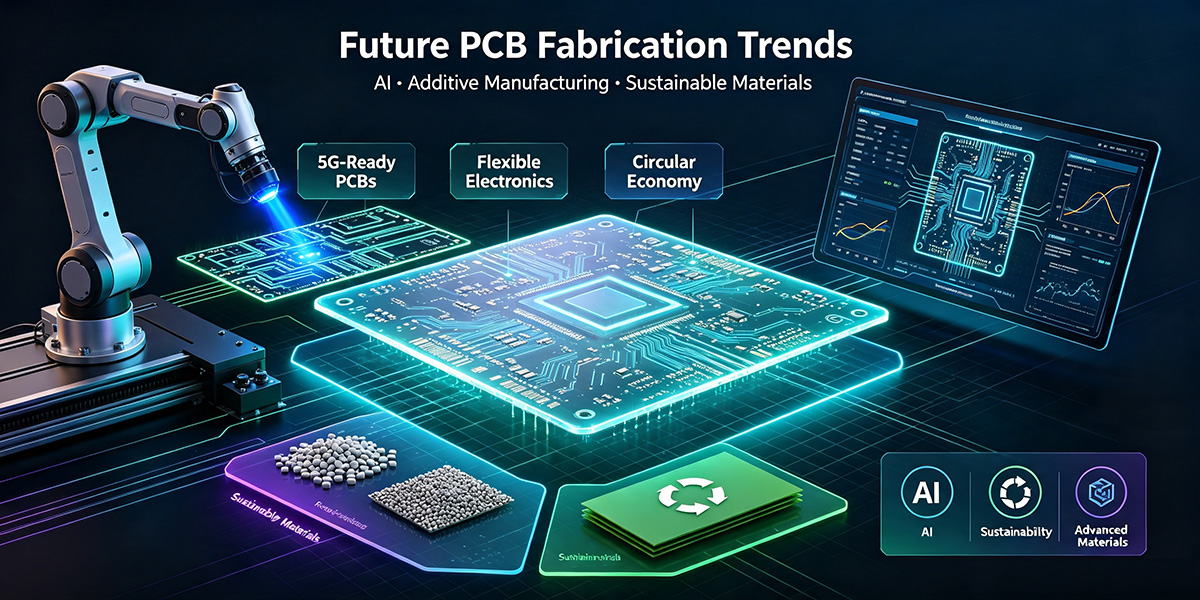
The PCB fabrication industry is evolving rapidly, driven by advances in technology, changing consumer demands, and sustainability requirements. Below are the key trends to watch in 2026 and beyond, and how they will impact PCB manufacturers and electronics companies.
1. Advanced Materials for High-Performance PCBs
As electronics become more complex and require higher performance, PCB manufacturers are adopting advanced materials to meet these demands. Key trends include:
High-Frequency Materials: Rogers and Isola materials for 5G and RF applications, offering low signal loss and stable performance at high frequencies
Flexible & Stretchable Materials: Polyimide and liquid crystal polymer (LCP) substrates for flexible and stretchable electronics, enabling wearable devices and foldable smartphones
Thermally Conductive Materials: Aluminum and copper-clad substrates with high thermal conductivity for power electronics and EV applications, improving heat dissipation
Sustainable Materials: Bio-based substrates and lead-free finishes to reduce environmental impact A leading 5G infrastructure company reduced signal loss by 30% by switching to Rogers high-frequency materials in their base station PCBs.
2. Additive Manufacturing for Rapid Prototyping & Customization
Additive manufacturing (3D printing) is emerging as a game-changer in PCB fabrication, enabling rapid prototyping and customization. Key benefits include:
Faster Prototypes: 3D-printed PCBs can be produced in hours instead of days
Complex Designs: Ability to create 3D PCBs and complex geometries that are impossible with traditional fabrication
Customization: Low-cost production of small batches or one-off custom PCBs
Reduced Waste: Additive manufacturing uses only the material needed, reducing waste by 90% compared to subtractive processes A US-based aerospace startup reduced prototype lead times from 7 days to 24 hours by using 3D-printed PCBs for their satellite avionics.
3. AI-Driven Design & Manufacturing
Artificial intelligence (AI) is transforming PCB fabrication, from design optimization to quality control. Key applications include:
AI-Driven DFM: AI algorithms that analyze design files and provide real-time feedback to optimize for manufacturability, reducing prototype iterations by 50%
Predictive Quality Control: AI systems that predict defects before they occur, reducing scrap rates by 30%
Smart Manufacturing: AI-powered production lines that adjust processes in real-time to improve efficiency and quality
Supply Chain Optimization: AI algorithms that predict material shortages and optimize inventory levels, reducing lead times by 20% A Chinese PCB manufacturer improved production efficiency by 40% by implementing AI-driven smart manufacturing systems.
4. Sustainability & Circular Economy Practices
Sustainability is becoming a critical factor in PCB fabrication, driven by consumer demand and regulatory requirements. Key trends include:
Lead-Free & Halogen-Free Materials: Adoption of lead-free finishes and halogen-free substrates to reduce environmental impact
Waste Reduction: Implementing closed-loop systems to recycle copper and other materials, reducing waste by 80%
Energy Efficiency: Using renewable energy sources and energy-efficient equipment to reduce carbon emissions
Circular Economy: Offering PCB recycling and remanufacturing services to extend product lifecycles A European PCB manufacturer achieved carbon neutrality in 2023 by switching to 100% renewable energy and implementing closed-loop recycling systems.
5. 5G & IoT-Ready PCBs
The growth of 5G and IoT is driving demand for PCBs with higher performance and connectivity. Key trends include:
High-Density Interconnect (HDI) PCBs: Compact PCBs with microvias and fine-pitch traces for IoT sensors and 5G modules
RF PCBs: High-frequency PCBs with controlled impedance for 5G base stations and devices
Edge Computing PCBs: PCBs with integrated processing capabilities for edge computing devices, reducing latency and improving performance
Low-Power PCBs: PCBs designed for low-power IoT devices, extending battery life by 40% A US-based IoT company improved sensor battery life by 45% by using low-power PCBs optimized for their devices.
How These Trends Will Impact PCB Manufacturers & Electronics Companies
PCB Manufacturers: Will need to invest in advanced technologies, materials, and AI systems to stay competitive. Specialization in niche areas like automotive, medical, or aerospace will become more important.
Electronics Companies: Will benefit from faster prototyping, higher performance PCBs, and more sustainable manufacturing options. They will need to work closely with their PCB manufacturers to leverage these new technologies.
Conclusion
The future of PCB fabrication is exciting, with advanced materials, additive manufacturing, AI-driven design, and sustainability leading the way. These trends will enable electronics companies to develop more innovative products, reduce costs, and improve sustainability. For PCB manufacturers, adapting to these trends will be critical to staying competitive in the rapidly evolving electronics industry. By partnering with forward-thinking PCB board manufacturers, electronics companies can position themselves for success in 2026 and beyond.
