
 Electronics Design & Development
 PCB Design & Layout Services
 PCB Fabrication & Prototyping
 PCB Assembly & PCBA Services





Flexible vs. Rigid-Flex PCBs: Which is Better for Industrial IoT Applications?
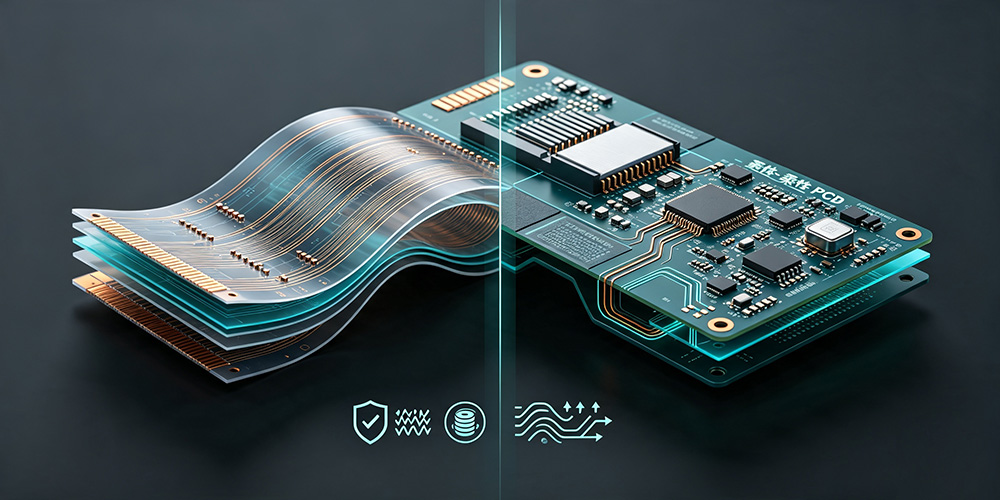
Industrial IoT (IIoT) sensors and devices are transforming manufacturing, logistics, and energy management by enabling real-time data collection and analysis. These devices operate in harsh industrial environments, including extreme temperatures, vibration, and dust, requiring PCBs that can withstand these conditions. Both flexible and rigid-flex PCBs are popular choices for IIoT applications, but which is better for your project? Below is a comprehensive comparison of flexible and rigid-flex PCBs for industrial IoT.
1. Durability in Harsh Industrial Environments
Industrial IoT devices are exposed to extreme temperatures (-40°C to 100°C), constant vibration, and chemical exposure. Both flexible and rigid-flex PCBs offer good durability, but rigid-flex PCBs have an edge in high-stress applications:
Flexible PCBs: Excellent for continuous bending applications, but may require stiffeners for structural support
Rigid-Flex PCBs: Combine flexible interconnects with rigid sections for structural stability, reducing component failure by 60% in high-vibration environments A study by the Industrial Internet Consortium found that rigid-flex PCBs had 85% longer lifespan than flexible PCBs in heavy machinery sensor applications.
2. Design Flexibility for Compact IoT Devices
Industrial IoT sensors often require compact designs to fit into tight spaces in machinery or infrastructure. Both PCB types offer design flexibility, but with different advantages:
Flexible PCBs: Can be bent, twisted, or folded into complex shapes, ideal for conforming to curved surfaces
Rigid-Flex PCBs: Offer the best of both worlds, with flexible sections for connectivity and rigid sections for component placement A German industrial IoT manufacturer reduced sensor size by 30% by using flexible PCBs that conform to the curved surfaces of their machinery.
3. Cost Comparison for IIoT Deployments
Industrial IoT projects often involve large-scale deployments, making cost a critical factor. Here's how flexible and rigid-flex PCBs compare:
Flexible PCBs: Lower upfront costs for simple designs, but may require additional components like stiffeners or connectors, increasing total cost of ownership (TCO)
Rigid-Flex PCBs: Higher upfront costs due to complex manufacturing processes, but eliminate the need for additional components, reducing TCO by 15–25% in large deployments A US-based logistics company found that rigid-flex PCBs had a 20% lower TCO than flexible PCBs in their 10,000-unit IoT sensor deployment, despite higher initial costs.
4. Environmental Resistance for Outdoor IIoT Sensors
Many industrial IoT sensors are deployed outdoors, exposed to rain, snow, and UV radiation. Both PCB types offer environmental resistance, but with different design considerations:
Flexible PCBs: Require conformal coatings to protect against moisture and UV radiation
Rigid-Flex PCBs: Offer better inherent environmental protection due to their rigid sections, which can be sealed more easily A Canadian energy company reduced outdoor sensor failure rates by 55% by using rigid-flex PCBs with integrated sealing in their wind turbine monitoring systems.
5. Component Placement & Signal Integrity
Industrial IoT sensors often require high-precision components and reliable signal transmission. Here's how the two PCB types compare:
Flexible PCBs: Limited component placement options due to flexible substrate, may require additional mounting hardware
Rigid-Flex PCBs: Offer stable component placement on rigid sections, with flexible interconnects for signal transmission, improving signal integrity by 30% compared to flexible PCBs A Japanese industrial automation supplier improved sensor data accuracy by 28% by switching to rigid-flex PCBs in their robotic arm monitoring systems.
Case Study: Flexible vs. Rigid-Flex in Water Treatment IoT Sensors
A European water treatment company was evaluating PCB options for their remote water quality monitoring sensors. They tested both flexible and rigid-flex PCBs and found:
Flexible PCBs: Lower initial cost, but required conformal coatings and stiffeners, increasing TCO by 18% over 3 years
Rigid-Flex PCBs: Higher initial cost, but no additional components needed, with 70% fewer field failures due to better environmental resistance The company ultimately chose rigid-flex PCBs for their long-term cost savings and reliability.
Conclusion
Choosing between flexible and rigid-flex PCBs for industrial IoT applications depends on your specific project requirements:
Choose Flexible PCBs for simple, low-cost designs, conformable applications, or small-scale deployments
Choose Rigid-Flex PCBs for high-stress environments, large-scale deployments, or applications requiring stable component placement and long-term reliability When selecting a PCB type, consider factors like durability, cost, design flexibility, environmental resistance, and signal integrity to ensure your industrial IoT device meets performance and longevity requirements.
