
 Electronics Design & Development
 PCB Design & Layout Services
 PCB Fabrication & Prototyping
 PCB Assembly & PCBA Services





Advanced PCB Assembly Capability in Automotive Electronics: Powering ADAS and EV Systems
Automotive electronics are becoming increasingly complex, with ADAS (Advanced Driver Assistance Systems) and electric vehicle (EV) systems requiring high-precision, reliable PCBs. Advanced PCB assembly capability and SMT assembly capability are critical for meeting the strict safety and performance requirements of these systems. Below is how advanced assembly technology supports automotive electronics and the benefits it offers to manufacturers.
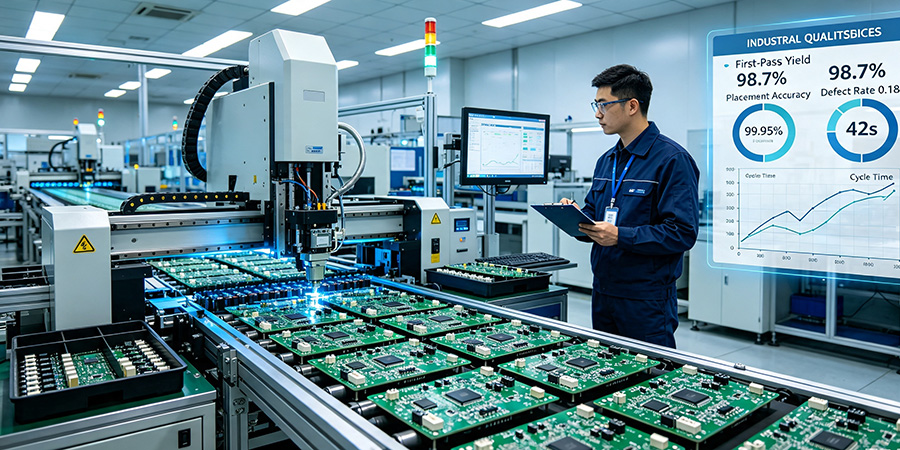
ADAS Systems: Precision & Reliability from Advanced SMT Assembly
ADAS systems like lane departure warning, adaptive cruise control, and automatic emergency braking rely on high-precision PCBs with micro-components. Advanced SMT assembly capability is essential for placing these components with ±0.02mm accuracy, ensuring reliable sensor data transmission. A South Korean PCB supplier uses advanced SMT assembly lines to produce ADAS PCBs for global automotive brands, with a 99.95% first-pass yield. Their SMT assembly capability includes handling fine-pitch BGAs and high-frequency RF components, which are critical for ADAS systems that operate in real time.
EV Battery Management Systems: Durability & Thermal Control
EV battery management systems (BMS) require PCBs that can withstand high temperatures and vibration, and advanced PCB assembly capability includes specialized processes to ensure durability. A Chinese PCB supplier uses aluminum-backed PCBs and automated thermal paste application to improve heat dissipation for EV BMS, extending PCB lifespan by 50% compared to traditional FR-4 PCBs. Their SMT assembly capability includes soldering high-power capacitors and connectors with lead-free solder that can withstand temperatures up to 125°C, ensuring reliable performance in EVs that operate in extreme weather conditions.
Compliance with Automotive Quality Standards
Automotive electronics must meet strict quality standards like IATF 16949, and advanced PCB assembly capability includes processes to ensure compliance. Top suppliers use traceability systems to track every component from sourcing to assembly, providing documentation for regulatory audits. A German PCB supplier uses blockchain technology to trace component origins for automotive PCBs, ensuring no counterfeit parts are used in ADAS and EV systems. This traceability is critical for meeting IATF 16949 requirements and ensuring product safety for end-users.
Fast Turnaround Times for Automotive Prototyping
Automotive manufacturers require fast turnaround times for prototype PCBs to test new ADAS and EV systems, and advanced PCB assembly capability includes rapid prototyping services. A US-based PCB supplier produces prototype ADAS PCBs in 24 hours using advanced SMT assembly lines, allowing automotive manufacturers to test new designs quickly and bring products to market faster. This rapid prototyping capability is essential for staying competitive in the fast-paced automotive industry, where new technologies are constantly emerging.
AI-Powered Quality Control for Zero Defects
Automotive systems have zero tolerance for defects, and advanced PCB assembly capability includes AI-powered quality control to ensure 100% quality. AI-driven X-ray inspection systems can detect hidden defects like voids in BGA solder joints, which are impossible to see with manual inspection. A Japanese PCB supplier uses AI X-ray inspection to inspect 100% of their automotive PCBs, reducing field failures by 40% and ensuring compliance with automotive safety standards. This not only improves product reliability but also reduces costly recalls for automotive manufacturers.
Sustainable Assembly Practices for Modern Automotive Brands
Automotive brands are prioritizing sustainability, and advanced PCB assembly capability includes eco-friendly processes. Top suppliers use lead-free solder, recyclable packaging, and energy-efficient production lines to reduce their carbon footprint. A French PCB supplier uses 100% renewable energy to power their SMT assembly lines, reducing carbon emissions by 60% and meeting the sustainability goals of their electric vehicle clients. This makes advanced PCB assembly a more sustainable option for automotive manufacturers that want to reduce their environmental impact.
Conclusion: Advanced PCB assembly capability is critical for meeting the complex requirements of automotive ADAS and EV systems. By partnering with a supplier that uses advanced SMT assembly, AI-powered quality control, and eco-friendly processes, automotive manufacturers can produce reliable, safe, and sustainable PCBs. As automotive technology continues to evolve, advanced PCB assembly capability will be essential for powering the next generation of electric and autonomous vehicles.
