
 Electronics Design & Development
 PCB Design & Layout Services
 PCB Fabrication & Prototyping
 PCB Assembly & PCBA Services





SMT Assembly Capability: How Modular Lines Support Flexible Production for Industrial IoT Projects
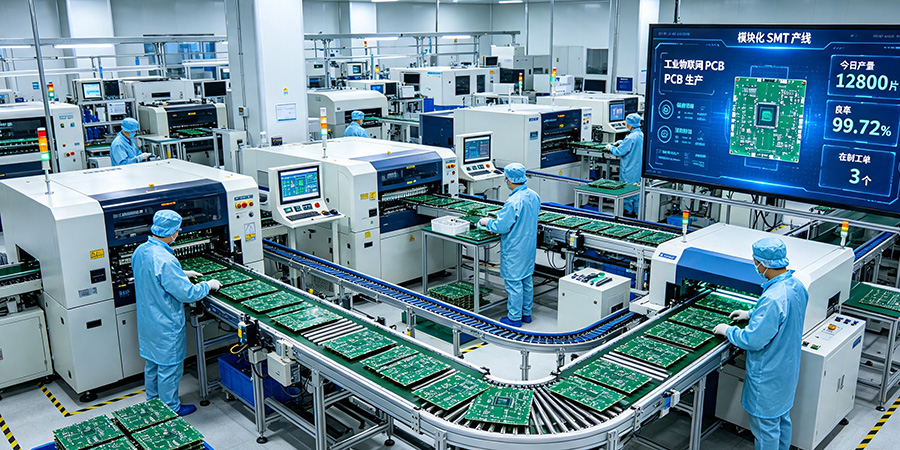
Industrial IoT projects require flexible PCB production that can adapt to fluctuating demand and complex designs, and advanced SMT assembly capability with modular lines is the solution. Modular SMT lines allow suppliers to reconfigure production processes quickly, supporting both low-volume prototypes and high-volume mass production for industrial IoT devices. Below is how modular SMT assembly capability works and the benefits it offers to industrial IoT manufacturers.
Modular SMT Lines: Adapting to Fluctuating Demand
Industrial IoT demand fluctuates with market trends, and modular SMT assembly capability allows suppliers to scale production up or down quickly. These lines consist of independent modules that can be added or removed based on order volume, ensuring efficient production without overcapacity. A US-based industrial IoT supplier uses modular SMT lines to produce 10,000–100,000 PCBs per month, adapting to seasonal demand for smart sensors and industrial gateways. During peak seasons, they add 2 extra pick-and-place modules to increase production capacity by 50%, while during slow periods, they reduce modules to cut energy costs by 30%. This flexibility ensures that the supplier can meet tight deadlines without compromising quality, even during unexpected demand spikes.
Supporting Complex Industrial IoT PCB Designs
Industrial IoT devices require complex PCB designs with high-density components, wireless modules, and power management circuits, and advanced SMT assembly capability includes processes to handle these designs. Modular SMT lines can be reconfigured to accommodate different PCB sizes, component types, and assembly processes, supporting everything from low-power sensor PCBs to high-power industrial gateways. A German industrial IoT supplier uses modular SMT lines to produce PCBs with 48 layers and high-frequency RF components, meeting the strict requirements of their clients in the automotive and manufacturing industries. Their SMT assembly capability includes handling fine-pitch BGAs with pin pitches as small as 0.3mm, ensuring reliable performance for industrial IoT devices that operate in harsh environments with high vibration and temperature fluctuations.
Rapid Prototyping for Industrial IoT Innovation
Industrial IoT innovation requires fast prototyping to test new designs, and modular SMT assembly capability includes rapid prototyping services. Suppliers can reconfigure modular lines to produce prototype PCBs in 24–48 hours, allowing industrial IoT manufacturers to test new designs quickly and bring products to market faster. A Canadian industrial IoT startup reduced their product development time by 30% by partnering with a supplier that offers rapid prototyping with modular SMT lines, enabling them to iterate on their smart sensor designs and launch their product 3 months ahead of schedule. This rapid prototyping capability is critical for staying competitive in the fast-paced industrial IoT market, where new technologies emerge daily.
Integration with Advanced PCB Assembly Capability for End-to-End Solutions
Modular SMT assembly capability is integrated with advanced PCB assembly processes to offer end-to-end solutions for industrial IoT projects. Top suppliers handle PCB design, manufacturing, SMT assembly, component sourcing, and testing under one roof, reducing logistics costs and eliminating delays caused by cross-border shipping. A Chinese industrial IoT supplier uses this integration to produce turnkey solutions for their clients, reducing project lead times by 25% and cutting costs by 15% compared to traditional outsourcing models. For example, they source high-temperature capacitors from local suppliers and assemble them in their modular SMT lines, ensuring on-time delivery for industrial IoT devices that operate in oil and gas refineries.
Sustainable Production with Modular SMT Lines
Modular SMT assembly capability also supports sustainable production for industrial IoT projects. These lines use energy-efficient modules and lead-free solder, reducing carbon emissions by 30% compared to traditional fixed lines. A French industrial IoT supplier uses solar-powered modular SMT lines to produce PCBs, reducing their carbon footprint by 50% and meeting the sustainability goals of their clients in the renewable energy industry. They also use recyclable packaging for their PCBs, reducing waste by 40% compared to traditional plastic packaging. This sustainable production capability is critical for industrial IoT manufacturers that want to reduce their environmental impact and meet the demands of eco-conscious customers.
Conclusion: Advanced SMT assembly capability with modular lines is essential for flexible production in industrial IoT projects, supporting fluctuating demand, complex designs, rapid prototyping, and sustainable production. By partnering with a supplier that uses modular SMT lines and advanced PCB assembly processes, industrial IoT manufacturers can reduce risks, cut costs, and bring innovative products to market faster. As the industrial IoT market continues to grow, modular SMT assembly capability will be critical for meeting the evolving needs of manufacturers and their customers, ensuring that industrial IoT devices are reliable, efficient, and sustainable.
