
 Electronics Design & Development
 PCB Design & Layout Services
 PCB Fabrication & Prototyping
 PCB Assembly & PCBA Services





Choosing the Right Electronic Components PCB for Your Electronic Circuit Board
Selecting the right electronic components PCB is critical for the performance, cost, and reliability of your electronic circuit board. With so many options available, choosing the best components can be overwhelming. This guide will help you make informed decisions when selecting electronic components PCB for your electronic pcb circuit.
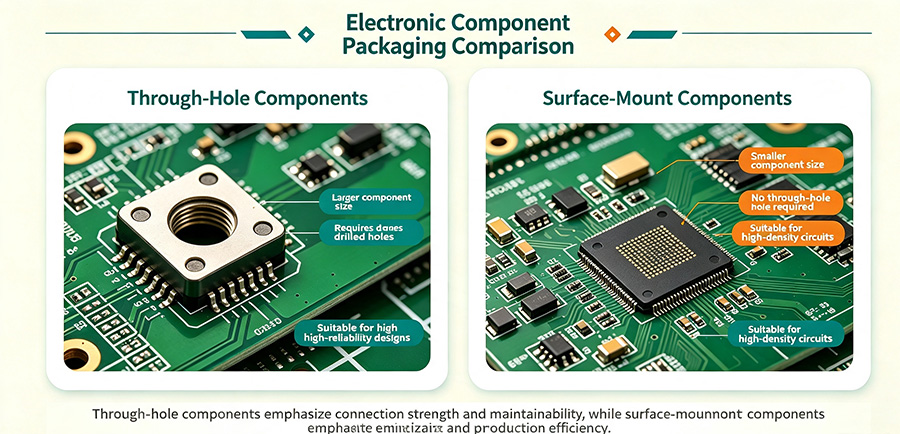
1. Through-Hole vs Surface-Mount Electronic Components PCB
The first decision is whether to use through-hole or surface-mount electronic components PCB:
Through-hole components: Ideal for prototypes, high-power applications, and components that require frequent replacement. They are easier to solder manually but take up more space on your electronic circuit board.
Surface-mount components (SMT): Smaller, lighter, and more suitable for high-volume production. They offer better electrical performance for high-frequency electronic pcb circuit but require automated assembly equipment.
2. Material Selection for Electronic Components PCB
The material of your electronic components PCB impacts their performance and durability:
Ceramic components: Offer high stability and low noise, making them ideal for high-precision electronic circuit board like sensors or test equipment.
Plastic components: Cost-effective and suitable for general-purpose electronic pcb circuit, but may not withstand extreme temperatures or high voltages.
Metal components: Provide excellent heat dissipation for high-power electronic components PCB like power transistors or diodes.
3. Performance Specifications for Electronic PCB Circuit
Choose electronic components PCB that match your electronic circuit board’s technical requirements:
Voltage & current rating: Components must handle the maximum voltage and current of your electronic pcb circuit to avoid failure.
Temperature range: Ensure components can operate in the minimum and maximum temperatures of your product’s environment.
Frequency response: For high-frequency electronic circuit board, select components with low parasitic capacitance and inductance to maintain signal integrity.
4. Cost vs Quality Tradeoffs
While cost is a factor, prioritize quality when selecting electronic components PCB. Cheap, counterfeit components can cause product failures, safety hazards, and costly recalls. However, you can reduce costs by:
Choosing standard components instead of custom parts.
Ordering in bulk to get volume discounts.
Using alternative components with similar specifications if your preferred part is overpriced.
5. Supplier Reliability
Work with reputable suppliers to ensure you get authentic, high-quality electronic components PCB. Look for suppliers with ISO certifications, traceability documents, and a track record of on-time delivery. Many suppliers offer free samples, allowing you to test components before placing a bulk order.
Conclusion: Choosing the right electronic components PCB requires balancing performance, cost, and reliability. By considering factors like component type, material, performance specifications, and supplier reliability, you can select components that meet your electronic circuit board’s needs and deliver a high-quality product. For more help with electronic pcb circuit design, consult our expert engineers or explore our library of design resources.
