
 Electronics Design & Development
 PCB Design & Layout Services
 PCB Fabrication & Prototyping
 PCB Assembly & PCBA Services





Custom PCB Board Prototype for Industrial Applications: Key Considerations
Industrial applications require custom PCB board prototype that can withstand harsh environments, high temperatures, and heavy use. Unlike consumer electronics, industrial PCB prototypes must be reliable, durable, and compliant with strict industry standards. Below are the key considerations to keep in mind when designing and producing custom prototype printed circuit boards for industrial applications.
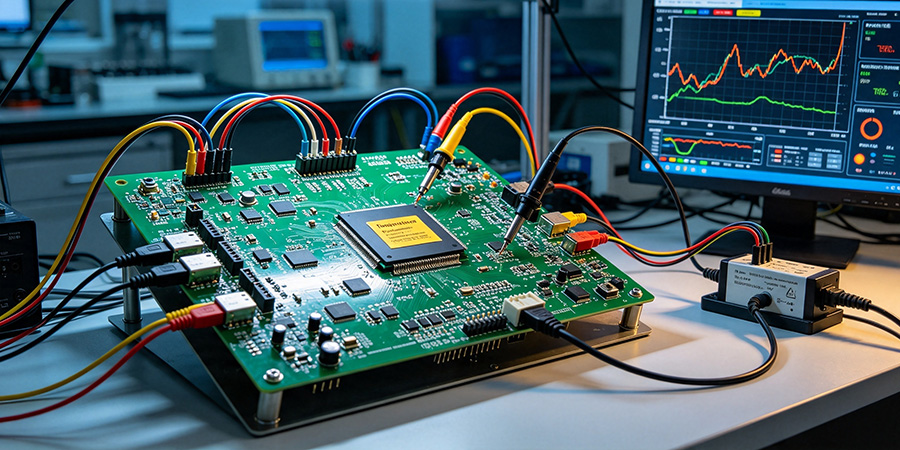
Consideration 1: Material Selection for Harsh Environments
Industrial PCB board prototype must be able to withstand extreme temperatures, humidity, and vibration. Choose materials that are durable and resistant to environmental factors:
Aluminum PCB: Excellent heat dissipation for high-power industrial applications like motor controls or power supplies.
Rogers Material: Ideal for high-frequency industrial circuits like radar or communication systems, offering excellent signal integrity.
High-Temperature FR-4: Can withstand temperatures up to 180°C, suitable for industrial applications in hot environments.
Consideration 2: Thermal Management
Industrial applications often generate high levels of heat, which can damage components and reduce the lifespan of your PCB board prototype. To manage heat effectively:
Use heat sinks or thermal vias to dissipate heat from high-power components.
Place heat-generating components away from heat-sensitive components like sensors or microcontrollers.
Use thermal simulation tools to optimize your layout for heat dissipation before production.
Consideration 3: Compliance with Industry Standards
Industrial PCB prototype printed circuit boards must comply with strict industry standards to ensure safety and reliability. Some common standards include:
IEC 60068: Tests for environmental resistance (temperature, humidity, vibration).
UL 94: Flammability standard for PCB materials.
RoHS: Restricts hazardous substances in electronic products.
ISO 9001: Quality management system standard for manufacturing.
Consideration 4: Durability & Reliability
Industrial PCB board prototype must be durable enough to withstand heavy use and harsh conditions. To improve reliability:
Use thick copper traces to handle high currents and reduce the risk of trace failure.
Use conformal coating to protect the board from moisture, dust, and chemicals.
Use through-hole components instead of surface-mount components for applications that require frequent maintenance or replacement.
Consideration 5: Customization & Flexibility
Industrial applications often require custom PCB board prototype that are tailored to specific needs. Work with a PCB prototyping service that offers customization options like:
Custom board sizes and shapes.
Specialized materials and finishes.
Custom component placement and routing.
Prototyping for multi-layer or rigid-flex PCBs.
Conclusion: Designing and producing custom PCB board prototype for industrial applications requires careful planning and consideration of material selection, thermal management, compliance, and reliability. By working with a specialized PCB prototyping service and following these key considerations, you can create a custom prototype printed circuit board that meets the unique needs of your industrial application.
