
 Electronics Design & Development
 PCB Design & Layout Services
 PCB Fabrication & Prototyping
 PCB Assembly & PCBA Services





Optimizing Hardware Costs: PCB Layout and Low-Volume Assembly Sourcing
Strategic Procurement for Hardware Prototypes: Optimizing Layout and Low-Volume Assembly Sourcing
For B2B procurement managers, supply chain directors, and hardware technology executives, bringing a new electronic product from concept to physical production is packed with financial and operational risks. Global component market volatility, unexpected engineering revision cycles, and extended bare-board lead times constantly threaten project timelines and R&D budgets.
To mitigate these operational risks, forward-thinking procurement teams are moving away from heavily fragmented vendor models. Instead, they are establishing strategic, long-term partnerships with an integrated pcb design and layout company working in direct sync with an agile, high-quality low volume pcb assembly supplier. This unified sourcing strategy drastically lowers the Total Cost of Ownership (TCO) and accelerates time-to-revenue.

The Hidden Costs of Disconnected PCB Design and Layout Companies
Managing separate vendors for PCB layout engineering, bare board fabrication, component sourcing, and final SMT assembly creates severe operational friction points. When these entities operate in silos, procurement managers bear the brunt of the resulting inefficiencies.
Engineering Change Orders (ECOs) and Respins
When a standalone pcb design and layout company designs a board without consulting the final assembly house, they often use unverified, non-standard component footprints or violate manufacturing spacing rules. When the design files finally reach the assembly floor, production halts. The resulting Engineering Change Orders (ECOs) require procurement to authorize expensive board respins, wasting thousands of dollars on scrapped bare boards and pushing product launch schedules back by weeks.
Bill of Materials (BOM) Obsolescence
Layout engineers focusing purely on schematic logic sometimes specify End-of-Life (EOL) components, or parts that are currently under severe market allocation, without checking real-time global distributor inventory. By the time procurement attempts to purchase the BOM, critical ICs are unavailable. A commercially integrated layout team performs automated BOM scrubbing via API connections to major distributors during the design phase. They proactively design with Form-Fit-Function alternate parts, ensuring supply chain flexibility before the first copper trace is even drawn.
Why You Need a Dedicated Low Volume PCB Assembly Supplier
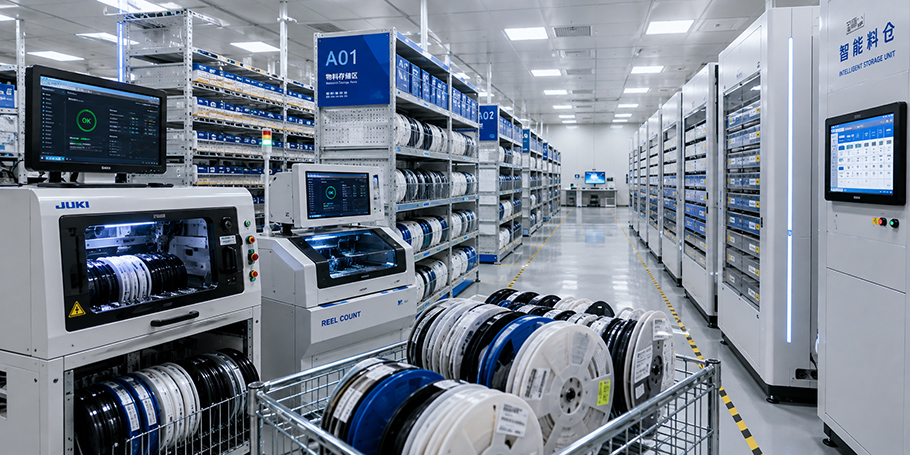
Once physical board files are locked and components are secured, handing production over to a flexible low volume pcb assembly supplier is the most effective way to maintain financial agility during the New Product Introduction (NPI) phase.
Bypassing High Minimum Order Quantities (MOQs)
Mega-tier contract manufacturers are designed to produce tens of thousands of units efficiently. If you force a small prototype run of 50 boards into their workflow, they will charge massive setup penalties or force you into Minimum Order Quantities (MOQs) that tie up critical operating capital in untested inventory. A specialized low-volume partner eliminates these rigid MOQs, offering flexible, cost-effective runs ranging from 5 to 500 units without batch penalties.
Turnkey and Consigned Inventory Flexibility
A versatile short-run assembly partner accommodates hybrid component sourcing models. Procurement teams can choose to supply proprietary, highly secure custom silicon (consigned), while trusting the assembly partner's established supply chain to procure standard passive components, connectors, and standard logic ICs (turnkey) directly from authorized franchise channels, completely mitigating the risk of counterfeit components.
Evaluating the Total Cost of Ownership (TCO) in NPI
Evaluating hardware manufacturing vendors purely on the initial piece-part quote is a classic procurement misstep. True cost optimization requires calculating the Total Cost of Ownership across the entire product development cycle.
Working with aligned layout and short-run assembly partners eliminates the hidden costs of disjointed communication. It prevents expensive component scrap stemming from obsolete layouts and ensures that the design transitions smoothly into mass production when volume scaling is required.
Best Practices for Auditing Your PCB Partners
When securing a partner for layout and low-volume assembly, ensure they maintain rigorous quality systems. Request proof of ISO 9001:2015 certification, and if you operate in specialized sectors, look for ISO 13485 (Medical) or IATF 16949 (Automotive) compliance. Demand full component traceability, where every board can be traced back to the specific operator, reflow profile, and component reel lot code.
Protect your hardware roadmap against unnecessary revision costs, supply chain bottlenecks, and launch delays by partnering with proven layout and manufacturing experts.
Looking to optimize your bill of materials and streamline your hardware prototyping costs?
Send us your preliminary design files and BOM today for a free, comprehensive cost-reduction and supply-chain risk analysis. Build smarter, faster, and with absolute confidence.
