
 Electronics Design & Development
 PCB Design & Layout Services
 PCB Fabrication & Prototyping
 PCB Assembly & PCBA Services





Printed Circuit Assembly vs. Printed Wiring Board: What’s the Difference?
When discussing electronic manufacturing, terms like printed circuit assembly (PCA) and printed wiring board (PWB) are often used interchangeably, but they refer to distinct stages in the production process. Understanding the difference between these two terms is essential for anyone involved in PCB design or manufacturing. Below is a clear breakdown of their roles and how they relate:
What Is a Printed Wiring Board (PWB)?
A printed wiring board (PWB) is the bare, non-functional board that serves as the foundation for electronic components. It consists of a dielectric substrate (usually fiberglass) with copper traces etched onto its surface to create electrical pathways. PWBs may have multiple layers, with vias connecting traces between layers for complex designs.
Key Features of PWBs:
No components attached—just the bare board with copper traces.
Available in various types: single-sided, double-sided, multi-layer, flexible, or rigid-flex.
Customizable with different substrates (e.g., FR-4, aluminum, Rogers) for specific applications.
Must meet industry standards like IPC-6012 for quality and reliability.
What Is Printed Circuit Assembly (PCA)?
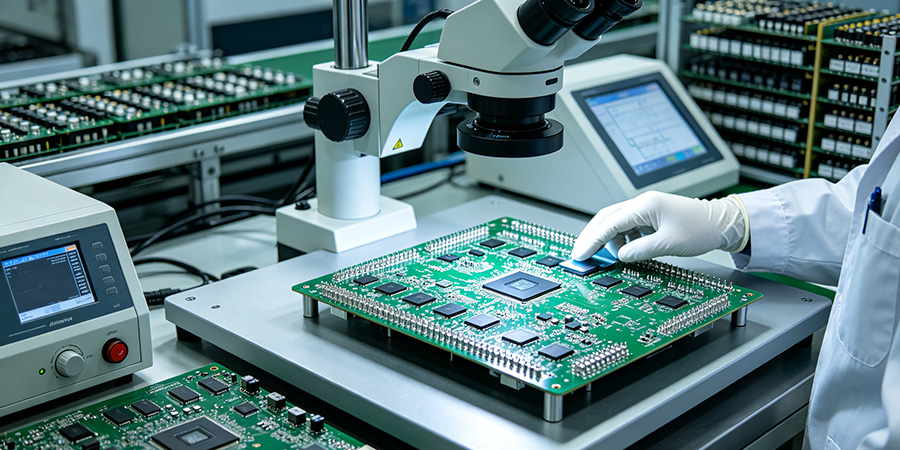
Printed Circuit Assembly (PCA) refers to the process of attaching electronic components to a printed wiring board to create a functional circuit board. This includes component placement, soldering, testing, and post-assembly processes. A finished PCA is ready to be integrated into an electronic device.
Key Features of PCA:
Includes a PWB with soldered electronic components (SMT, THT, or hybrid).
Requires specialized equipment like pick-and-place machines, reflow ovens, and testing tools.
Must comply with assembly standards like IPC-A-610 for acceptable solder joints and component placement.
Customized to meet specific device requirements, including performance, size, and reliability.
How PWBs and PCAs Work Together
The relationship between PWBs and PCAs is straightforward:
A PWB is manufactured first, with copper traces etched onto the substrate.
Components are sourced and placed onto the PWB during the printed circuit assembly process.
The assembled PCA is tested and inspected to ensure functionality.
The finished PCA is integrated into an electronic device or system.
Common Confusions: PCB vs. PWB vs. PCA
PCB (Printed Circuit Board): A general term that can refer to both bare PWBs and assembled PCAs.
PWB (Printed Wiring Board): Specifically the bare board without components.
PCA (Printed Circuit Assembly): The assembled board with components attached.
Conclusion: Understanding the difference between printed circuit assembly and printed wiring board is critical for effective communication with your manufacturing partner. Whether you need a bare PWB or a fully assembled PCA, working with a professional provider ensures you get the right solution for your project.
